Introduction
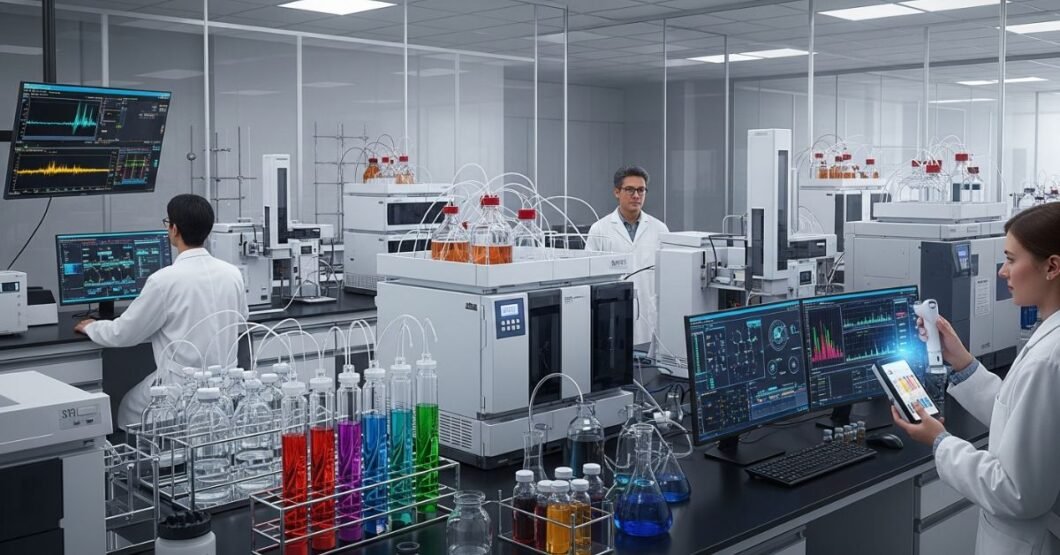
In the fast-evolving world of analytical chemistry, few tools are as vital or as versatile as chromatography techniques. Chromatography plays a crucial role in identifying unknown toxins in forensics, ensuring pharmaceutical purity, and analyzing pollutants in water. In 2026, advancements in this field are making separation processes faster, cleaner, and more accurate than ever.
Chemists, biologists, and environmental scientists rely on these methodologies to decode complex compound mixtures into actionable components. Thanks to emerging applications in green chemistry, real-time diagnostics, and nanomaterial research, chromatography techniques remain as fundamental as ever. Whether you’re a student new to separation science or a professional refining your analytical workflow, this guide will walk you through key techniques, real-world applications, and innovations shaping the lab bench in 2026.
What Is Chromatography? A Quick Refresher
Before diving into advanced forms, it’s important to understand the foundational principle of chromatography. At its core, chromatography separates a mixture into its individual components based on how those components interact with a stationary phase and a mobile phase.
Components that interact more strongly with the stationary phase move slower, while those that favor the mobile phase move faster creating separation.
Chromatography is essential for:
- Drug development
- Food safety testing
- Clinical diagnostics
- Forensic investigations
This simplicity allows the concept to scale from paper-based school experiments to billion-dollar analytical platforms in pharmaceutical research.
Gas Chromatography (GC): Speed and Sensitivity in Volatile Analysis
Gas chromatography excels in analyzing volatile compounds with high precision. Samples are vaporized and carried by an inert gas like helium or nitrogen through a capillary column coated with stationary phase materials.
Core advantages of GC:
- High-speed analysis with reproducible retention times
- Used in environmental testing, toxicology, petrochemical research
- Detection methods include Flame Ionization Detector (FID) and Mass Spectrometry (MS).
Example Application:
Detecting pesticide residues in food exports, which must meet international safety regulations.
Emerging GC instruments in 2026 integrate real-time feedback mechanisms using AI to auto-calibrate based on solvent quality and ambient lab conditions.
Liquid Chromatography (LC): The Workhorse for Non-Volatile Samples
Liquid chromatography is indispensable in separating larger or thermally unstable molecules, often found in pharmaceuticals, proteins, and organic acids.
Typical LC Components:
- High-pressure pump
- Solvent reservoir
- Sample injector
- Stationary phase-packed column
- UV or MS detector
There are multiple modes normal-phase, reverse-phase, and ion exchange depending on the sample properties.
| LC Mode | Sample Type | Mobile Phase Types |
| Reverse-Phase LC | Polar compounds | Water/organic solvent |
| Ion Exchange LC | Charged molecules (ions) | Salt gradient solution |
| Size Exclusion LC | Proteins, polymers | Buffered solution |
In 2026, ultra-high-performance LC (UHPLC) systems allow for even greater resolution and faster throughput, supporting high-stakes environments like new drug approval testing.
Paper and Thin Layer Chromatography (TLC): Simple Yet Powerful
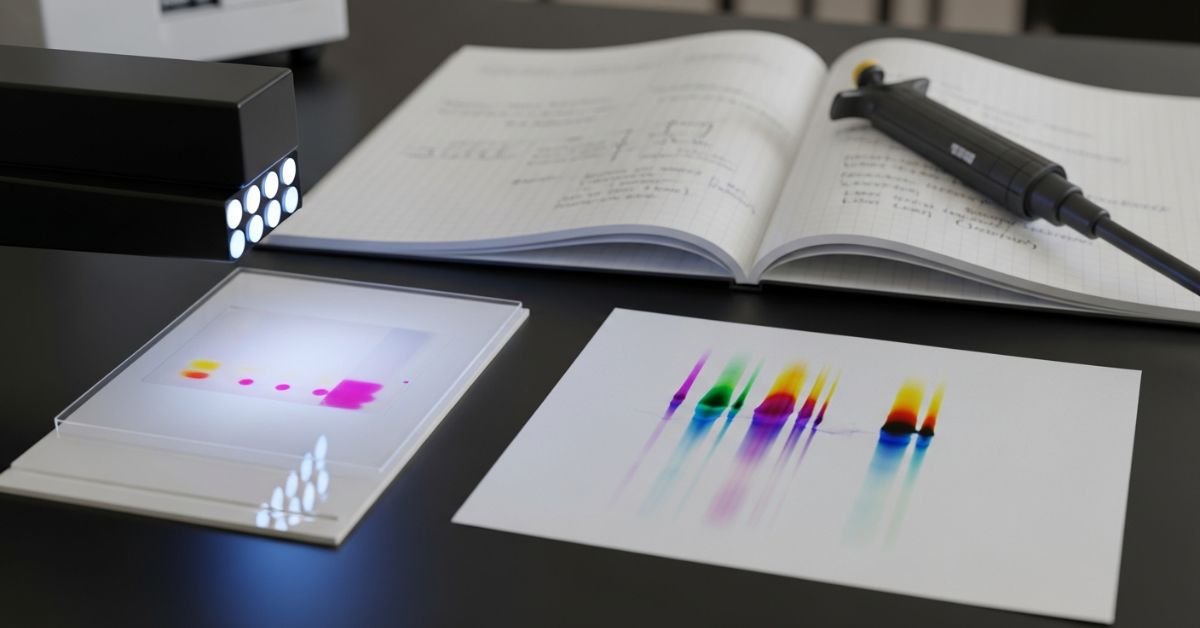
Despite the rise of complex instrumentation, manual chromatography methods such as paper and TLC still serve critical roles in both education and research environments.
Paper Chromatography:
- Uses filter paper as the stationary phase
- Primarily for qualitative analysis
- Still used for plant pigment studies, forensics, dyes
TLC:
- Silica-coated plate as the stationary phase
- Mobile phase selected based on polarity
- Offers Rf values for comparative analysis
- Used widely in organic labs and column chromatography development
These methods bring simplicity and visual clarity that larger systems can’t. While resolution may be low, their ability to screen compounds on the go keeps them relevant, especially in under-resourced labs or for quick reaction tracking.
Column Chromatography: Manual Precision in Laboratory Settings
Column chromatography remains one of the most adaptable tools for general lab-scale purification. Whether done under gravity or vacuum flow, it allows chemists to isolate compounds with acceptable purity for next-step synthesis.
The process often uses:
- Silica or alumina as adsorbents
- Step or gradient elution
- Colored bands visible during separation
Column chromatography is being hybridized in 2026 through:
- Automated sample loaders
- Solvent recycling systems
- Real-time monitoring with portable detectors
These upgrades improve yield, reduce waste, and keep this old method fresh in modern chemistry workflows.
Affinity Chromatography: Targeted Separation in Biochemistry
This technique is highly specific and widely used in biotechnology and immunology. Affinity chromatography separates biomolecules by binding them to a ligand that’s attached to a stationary matrix.
Applications include:
- Purifying antibodies and enzymes
- Protein-tag isolation (e.g., His-tag, GST-tag)
- Hormone purification for assays
Advantages:
- High specificity
- Excellent for purifying biologics
- Maintains activity of sensitive molecules
Each column is customized based on the ligand-analyte relationship, which makes this one of the most powerful yet niche chromatography techniques in use today.
Ion Chromatography: Electric Charge as a Separation Tool
Ion chromatography is optimized for detecting and quantifying ions and polar molecules in aqueous samples crucial in water quality assessments and pharmaceutical controls.
Example Use Cases:
- Measuring bicarbonate levels in drinking water
- Detecting sulfate in refinery waste
- Testing for lithium in psychiatric medication
Ion exchange columns are designed with fixed ion charges that interact with mobile phase ions during elution. Conductivity detectors are typically used for final analysis.
In 2026, a breakthrough occurred with the development of “green” eluant systems that reduce chemical waste, along with portable ion chromatography kits designed for fieldwork in environmental monitoring.
Supercritical Fluid Chromatography (SFC): Green Chemistry in Action
SFC uses supercritical CO₂ as the mobile phase, allowing for rapid, solvent-reducing separations with minimal impact. It bridges the gap between gas and liquid chromatography.
Why SFC matters in 2026:
- Eco-friendly: lowers use of toxic solvents
- Rapid run times = high batch throughput
- Used for chiral separations in drug synthesis
| Attribute | Liquid Chromatography | SFC |
| Solvent Use | Moderate to High | Very Low |
| Run Time | 10–30 min | Under 10 min |
| Resolution (Chiral) | Moderate | High |
| Environmental Impact | Moderate | Low |
Pharma companies worldwide now depend on SFC for scalability trials and high-throughput screening in environmentally regulated zones.
Real-Time Detection and Automation in Chromatography Labs
Technology is transforming how chromatographic data is processed and actions are taken.
Modern features include:
- AI-driven peak recognition for complex mixture analysis
- Integration with LIMS systems for automatic data reporting
- Remote control via mobile and desktop apps
- Dual-sensor validation models reducing error rates
These real-time detection advancements improve reproducibility and operator safety. Automated chromatography instruments can now self-calibrate, flag anomalies, and adjust parameters using closed-loop systems.
Among the most innovative systems are hybrid models that combine multiple chromatography techniques into one platform, streamlining complex workflows.
Future Trends: Integrated Chromatography and Beyond
As analytical demands grow, so will the expectations of chromatography systems. Multi-modal and hybrid methods like combining mass spectrometry with ion chromatography are becoming standard.
Upcoming Trends to Watch:
- Nanofluidic chromatography for ultra-micro sample handling
- Machine learning optimization of gradients and flows
- Internet-connected chromatography for global collaboration
- Lab-on-a-chip platforms using micro-scale chromatography
In this rapidly evolving field, chromatography techniques are not static—they adapt alongside materials science, healthcare needs, and chemical engineering innovations.
FAQs
What are chromatography techniques used for?
They separate components of mixtures for identification, purification, or quantification.
Which chromatography is best for small ions?
Ion chromatography is designed for analyzing ionic compounds in solution.
Can chromatography be automated?
Yes, most modern systems support full automation, including sample loading and analysis.
Is gas chromatography better than liquid chromatography?
GC is better for volatile compounds; LC is suitable for non-volatile, polar substances.
How is chromatography used in pharmaceuticals?
It ensures drug purity, stability, and compliance with quality standards.
Conclusion
Chromatography continues to evolve in 2026 as one of the cornerstones of modern chemistry. From gas and liquid systems to niche applications like affinity and supercritical fluid chromatography, each method plays a unique role in advancing science, medicine, and environmental safety. The rise of automation, AI integration, and sustainable protocols ensures this field remains future-ready.
Whether you’re starting a chromatography course or running a full-scale lab, mastering these tools is essential to achieving precision and effectiveness in analytical work.